I. Introduction
The stakes involved in heavy lifting projects cannot be overstated. When you are moving tons of steel, delicate HVAC units, or priceless industrial machinery through the air, gravity is constantly working against you. A single miscalculation, a slight breeze at the wrong moment, or a momentary lapse in communication can result in catastrophic safety hazards, devastating property damage, and massive budget overruns. In the world of hoisting and heavy materials handling, there is simply no margin for error.
Unfortunately, a common pitfall for many project managers and site supervisors is treating the procurement of lifting machinery as a simple commodity transaction. Driven by tight margins and strict deadlines, the default strategy is often to collect three bids and hire the lowest one. This approach fundamentally misunderstands the nature of the work. You are not just paying for a piece of steel machinery to arrive on your site; you are investing in the engineering, safety protocols, and operational expertise of the team behind it. Treating this selection process purely as a line-item expense is a gamble that responsible professionals cannot afford to make.
To ensure a safe, efficient, and legally compliant project, you must interview your lifting experts as though they are vital business partners. The provider you choose will be temporarily taking on a massive amount of liability and operational control on your job site. You need to know exactly how they operate, how they train their people, and how they react when things do not go according to plan.
This comprehensive guide is designed to equip you with the specific, penetrating questions you need to ask before signing any contracts. We will cover how to vet credentials, assess equipment suitability, evaluate safety cultures, manage logistics, and plan for inevitable contingencies. By the time you finish this guide, you will have a robust framework for separating the true professionals from the risky operators.
II. Verifying Credentials and Financial Protections
The legal and financial foundation of your partnership is the first thing you must establish. Do not allow impressive machinery or a charismatic salesperson to distract you from the paperwork. If a provider’s documentation is disorganized or lacking, their operational safety will likely reflect that same negligence.
Demand Proof of Specific State and Federal Certifications
In the construction and industrial sectors, general contractor licenses are completely insufficient for specialized hoisting tasks. You must dig deeper into the specific qualifications held by the operators who will be manipulating the levers on your site. The gold standard in the United States is certification through the National Commission for the Certification of Crane Operators (NCCCO).
When you sit down with potential partners, you must ask to see the physical or digital certification cards for the specific operators assigned to your project. Furthermore, operators must be certified for the exact class of machinery they will be operating. An operator certified on a fixed cab machine is not necessarily certified to operate a swing cab machine.
Top-tier crane companies maintain immaculate compliance files for their clients and will never hesitate to produce this documentation. Beyond operator certifications, inquire about the company’s compliance with local lifting regulations, municipal permits, and federal Occupational Safety and Health Administration (OSHA) standards.
Key questions to ask during the certification review:
-
Are all operators currently certified by the NCCCO or an equivalent recognized body?
-
Do you hold the specific municipal permits required to operate in our city limits?
-
Can you provide documentation of recent OSHA compliance audits?
-
Are your operators subjected to random drug and alcohol screening?
Scrutinize the Details of Their Liability Coverage
Insurance in the heavy lifting industry is complex, and assuming you are fully covered just because a provider claims to be “licensed and insured” is a dangerous oversight. You must understand the nuances of their policy and how it interacts with your own site insurance.
Ask directly: “Does your insurance cover the specific replacement value of the load being lifted, or just the machinery itself?” This is a crucial distinction. General liability insurance typically covers third-party bodily injury and property damage, but it often excludes the actual item suspended on the hook. For that, the provider needs specialized coverage, often referred to as rigger’s liability or “on-hook” coverage.
A reputable crane service will readily supply a Certificate of Insurance (COI) upon your first request. When you receive this document, have your own risk management team review it. Pay attention to the policy limits. If you are lifting a multi-million dollar generator, a standard one-million dollar policy will leave you severely exposed.
Critical points to verify on their insurance policy:
-
Ensure they carry adequate “on-hook” coverage matching the value of your asset.
-
Check for a Waiver of Subrogation, which prevents their insurance company from suing yours in the event of a covered loss.
-
Verify that your company can be listed as an Additional Insured on their policy for the duration of the project.
-
Confirm that their workers’ compensation coverage is active and adequately funded.
III. Matching Equipment to Your Specific Site Needs

Once the legalities are verified, the focus shifts to the physical capabilities of the machinery and how it integrates with your project site. Equipment sizing is a highly technical process, and relying on guesswork is a recipe for disaster.
Request a Pre-Lift Site Inspection for Accurate Sizing
One of the most dangerous practices in the industry is attempting to estimate load weights, boom lengths, and lift radii over the phone. A provider who gives you a firm quote without ever looking at your job site is cutting corners. You must insist on a comprehensive pre-lift site inspection.
During this visit, the provider’s estimator or lift director should evaluate several critical factors. They need to assess ground bearing pressure to ensure the soil or pavement can support the massive weight of the machinery outriggers. They must map out overhead obstructions, paying special attention to active power lines, which dictate strict clearance zones.
If your project is located in a congested urban environment or a tight residential neighborhood, a highly adaptable mobile crane might be the only viable solution to navigate narrow streets and confined setup areas. The estimator must calculate the exact swing radius to ensure the counterweights will not strike adjacent structures during the operation.
Elements to review during the site inspection:
-
Soil stability and the need for specialized outrigger mats or cribbing.
-
Ingress and egress routes for massive machinery entering the job site.
-
Potential interference from underground utilities, vaults, or uncompacted fill.
-
Accurate measurements of the load’s dimensions, weight, and center of gravity.
Confirm the Transport Logistics for Getting Gear to Your Site
Getting the hoisting machinery to your site is often just as complex as the lift itself. Massive equipment cannot simply be driven down the highway like a standard commercial truck. You need to understand the mobilization and demobilization logistics to ensure they align with your project schedule.
Ask the provider how the equipment will arrive. For the largest classes of machinery, the boom, the tracks, and the counterweights must be disassembled and transported separately. This process requires a fleet of specialized transport vehicles. You must verify that the provider has access to reliable crane carriers to move these massive components efficiently.
Furthermore, heavy transport often requires coordination with state Departments of Transportation (DOT). Oversized loads may require special routing, escort vehicles, and restricted travel hours. If the provider fails to secure these permits in advance, your entire project could be delayed while the equipment sits in a staging yard miles away.
Questions to clarify transport and logistics:
-
Who is responsible for securing the necessary DOT oversized load permits?
-
How many transport trucks will be required to mobilize the equipment?
-
How many hours of assembly time are required once the equipment arrives on site?
-
Will road closures or traffic control measures be necessary for the arrival?
IV. Evaluating the Crew’s Experience and Safety Culture
The most advanced machinery in the world is useless—and highly dangerous—in the hands of an inexperienced crew. When vetting a partner, you must look beyond the iron and evaluate the human element. A company’s track record and their internal safety culture are the truest indicators of how your project will be handled.
Ask for Case Studies of Similar Past Projects
Experience is highly contextual. A team that excels at setting roof trusses on residential builds might be completely out of their depth trying to execute a dual-lift operation at a bustling petrochemical refinery. You need to ask for proof that the provider has successfully executed lifts that mirror the complexity, scale, and specific industry requirements of your own project.
Request detailed case studies, project portfolios, or reference contacts. When evaluating comprehensive crane rental services, you are looking for a provider that does more than just drop off equipment; you want a strategic partner who actively participates in the pre-lift planning and engineering phases. Ask how they overcame specific logistical hurdles on past jobs.
When speaking to their past clients, ask pointed questions about the crew’s professionalism, punctuality, and adherence to site rules.
“Did the crew arrive prepared? Did they integrate well with your on-site personnel? How did they handle unexpected weather delays or changes to the lift plan?”
Request Their Experience Modification Rate (EMR) Score
While anecdotal references are valuable, you also need hard, objective data regarding a company’s safety history. The most reliable metric for this is the Experience Modification Rate (EMR) score. This is a number used by insurance companies to gauge both past cost of injuries and future chances of risk.
Here is how to interpret the score: An EMR of 1.0 is considered the industry average. If a company has an EMR above 1.0, it means they have had a higher than average number of safety incidents or workers’ compensation claims. Conversely, an EMR below 1.0 indicates a superior safety record. Elite crane services pride themselves on maintaining exceptionally low EMR scores, often hovering around 0.7 or 0.8.
You should establish a hard rule for your procurement process: immediately disqualify any provider with an EMR above 1.0. A high score suggests systemic failures in their safety culture, inadequate training, or reckless operational habits.
Key indicators of a strong safety culture:
-
An EMR score well below the industry average of 1.0.
-
Mandatory daily safety meetings or “toolbox talks” prior to any lifting.
-
A clear “Stop Work Authority” policy that empowers any crew member to halt operations if they spot a hazard.
-
Documented, ongoing safety training programs for all field employees.
V. Clarifying Support Crews and Specialized Handling
A successful lift requires a perfectly synchronized symphony of personnel. The person in the operator’s cab is only one part of the equation. The vital work that happens on the ground, before the load ever leaves the earth, dictates the safety and success of the entire operation.
Ensure Qualified Signal Persons and Ground Crews are Included
The operator sitting inside the cab often has a limited field of vision, especially when placing a load on a high roof or lowering it into a blind shaft. They rely entirely on the eyes, judgment, and communication skills of the personnel on the ground. Therefore, you must ask if certified signal persons and spotters are included in the quote, or if you are expected to provide them yourself.
Furthermore, the act of securing the load to the hook is a highly specialized discipline. If the center of gravity is miscalculated, or if the wrong type of slings are used, the load can shift, slip, or plummet the moment it clears the ground. Top-tier rigging services involve advanced mathematical calculations to account for dynamic loading, wind resistance, and the structural integrity of the lifting points on the load itself.
Never assume that the ground crew is fully qualified just because they work for the hoisting provider. Ask for their specific certifications, just as you did for the operator.
Essential ground crew roles to verify:
-
Lift Director: The single point of authority overseeing the entire operation.
-
Certified Signal Person: The only individual authorized to give hand or radio signals to the operator.
-
Certified Rigger: The expert responsible for selecting and inspecting the slings, shackles, and hardware used to secure the load.
Define Boundaries for Machinery Transport and Placement
A frequent point of friction on job sites occurs during the transition of the load. When the item is disconnected from the hook, whose responsibility is it? You must clearly define the boundaries of the hoisting provider’s scope of work to avoid damage and disputes.
For example, if you are moving a sensitive piece of medical equipment or a massive manufacturing lathe, getting it through the roof or over a wall is only step one. Once it is resting on the ground, it may need to be skidded, rolled, or jacked into its final precise location. You need to ask if the provider acts as a comprehensive heavy equipment mover, capable of handling the final placement, or if their responsibility ends the moment the tension comes off the hoist line.
Establishing these hand-off protocols ensures that there is no ambiguity regarding liability. If an item is damaged while being skidded across a factory floor after the main lift, you need to know exactly whose insurance is on the hook.
Clarify the following operational boundaries:
-
Who is responsible for unhooking the load once it is safely on the ground?
-
Does the provider supply skates, jacks, or rollers for final interior placement?
-
Who assumes liability during the transition from the hook to the ground transport?
-
Are the ground crews trained in handling sensitive, high-value, or fragile machinery?
VI. Planning for Contingencies and Downtime
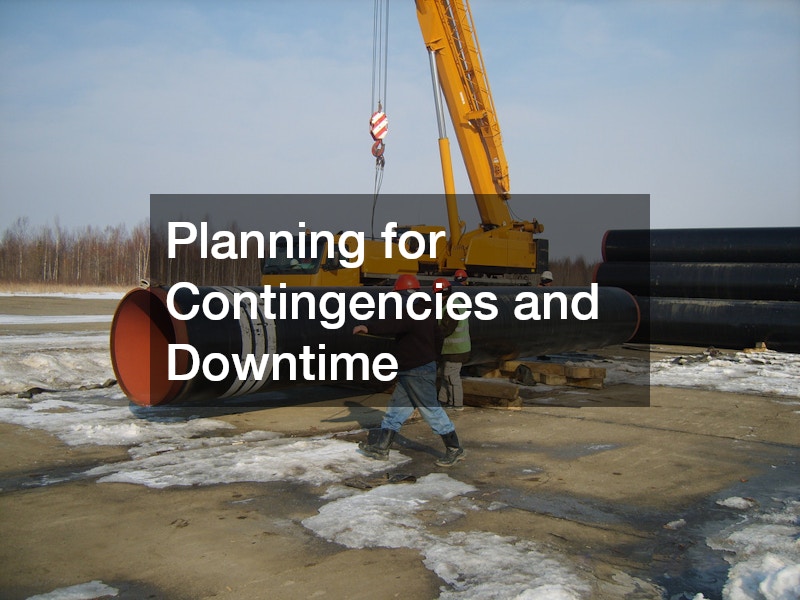
Even with the most meticulous planning, heavy construction and industrial environments are inherently unpredictable. Machinery breaks down, weather turns hostile, and schedules shift. The hallmark of a truly professional partner is not that they never face problems, but rather how they prepare for and respond to them.
Ask About Their Protocol for Mid-Project Mechanical Failures
Imagine you have a main street shut down, a massive police detail on the clock, and fifty structural steelworkers waiting on a deck, and the hoisting machinery suddenly blows a hydraulic line. Every minute of downtime is burning through your project budget. You must know exactly how the provider intends to handle catastrophic mechanical failures.
Ask them directly: “What is your emergency response protocol if the machinery fails during our scheduled lift?” You want to hear that they have a deep bench of backup equipment they can deploy rapidly. Furthermore, inquire about their internal maintenance capabilities. A provider that relies entirely on third-party mechanics will inevitably suffer from slower response times. Opting for a partner that offers dedicated local crane repair through their own fleet of mobile service trucks ensures that minor mechanical issues can be rectified on the spot, preventing a minor leak from ruining a multi-day schedule.
Questions to gauge emergency preparedness:
-
What is the guaranteed response time for a mobile mechanic to arrive on our site?
-
Do you have identical backup machinery available in your yard if a total replacement is needed?
-
Will we be billed for downtime if the delay is caused by your equipment failure?
-
How are spare parts sourced for the specific machine assigned to our project?
Review the Daily Maintenance Logs Before Signing the Contract
The best way to handle a mechanical failure is to prevent it from happening in the first place through rigorous, preventative maintenance. You have every right to inspect the health and history of the specific machine that will be operating over your job site.
Before signing a contract, ask to see the recent maintenance records. A transparent, trustworthy crane company will have these logs meticulously organized, often digitized, and readily available for client review. You are looking for evidence of consistent daily, monthly, and annual inspections.
Pay specific attention to the wire rope inspection logs. The wire rope is the literal lifeline of the operation, and it is subject to immense wear and tear. It must be inspected for broken wires, corrosion, and crushing. If a provider is hesitant to show you their maintenance logs, or if the logs are filled out in pencil with identical checkmarks for the past six months, it is a massive red flag. Walk away immediately.
Key documents to review in the maintenance file:
-
The most recent Annual Comprehensive Inspection report signed by a qualified inspector.
-
Daily shift inspection logs completed by the operators.
-
Records of scheduled preventative maintenance (e.g., oil changes, hydraulic fluid flushes).
-
Specific inspection logs for the load blocks, hooks, and wire ropes.
VII. Conclusion
Securing the right lifting experts is one of the most critical decisions you will make during the lifecycle of a heavy construction or industrial project. A successful, incident-free lift is rarely the result of luck; it is almost always the product of exhaustive planning, rigorous vetting, and uncompromising standards. By shifting your mindset from simply renting a piece of equipment to forging a strategic partnership, you protect your budget, your timeline, and most importantly, the lives of everyone on your job site.
The questions outlined in this guide are designed to be challenging. They require a provider to prove their competence, their financial stability, and their commitment to safety. When you sit down with a prospective partner, observe how they react to this level of scrutiny. A true professional will welcome these questions. They will be proud to show off their certifications, their immaculate maintenance logs, and their stellar safety records. If a contractor becomes defensive, evasive, or attempts to rush you through the vetting process, trust your instincts and look elsewhere.
Do not allow the pressure of deadlines to compromise your due diligence. Keep this comprehensive framework on hand for your next procurement cycle. Use it to interview potential providers, demand transparency, and build a foundation of absolute trust before a single piece of heavy machinery ever mobilizes to your site. Your diligence in the boardroom will ultimately guarantee your success on the job site.