
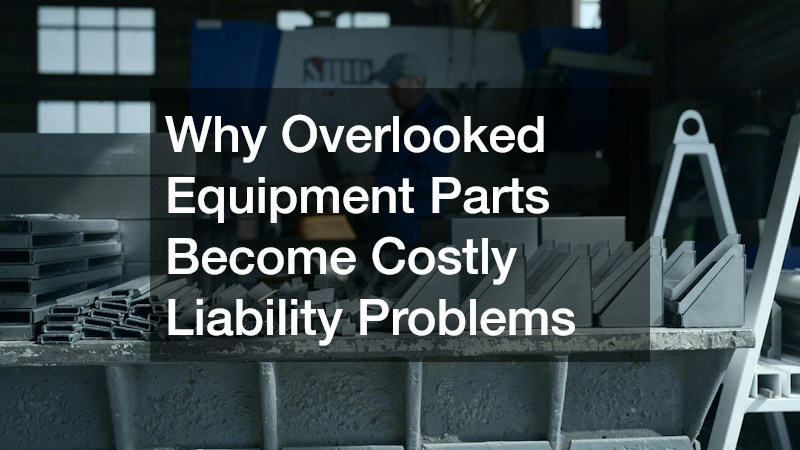
A single worn-out part sitting unnoticed on a piece of machinery rarely looks like a problem. But that small, neglected component is often the first domino in a chain that ends with an injury, a lawsuit, or a business shutting its doors. Whether you own equipment, operate it, or simply want to understand your rights after an accident, knowing how minor parts turn into major liabilities can save you money, stress, and physical harm. This article breaks down the most common overlooked culprits and what you can do before or after they cause trouble.
Identifying the Small Parts That Cause Big Failures
Most equipment failures do not start with a dramatic breakdown. They start with a worn bolt, a cracked hose, a dull cutting edge, or a sensor that has quietly stopped reporting accurate data. These small components are frequently excluded from routine inspections because attention naturally gravitates toward the larger, more expensive systems.
Owners and operators often assume that if the main engine or motor is running smoothly, the machine is safe to use. That assumption is dangerous because many of the parts responsible for safe operation are inexpensive and easy to replace, yet their failure can disable an entire machine or injure a bystander.
- Fasteners and bolts that loosen from vibration over time
- Hydraulic seals and hoses that degrade from heat exposure
- Sensors and safety switches that fail silently
- Blades, edges, or cutting components that dull or chip
- Wiring connections that corrode in outdoor conditions
Understanding How Grading and Leveling Equipment Breaks Down
Heavy equipment used for grading roads, lots, and construction sites depends on components that take constant abrasive punishment. The cutting edges on this equipment wear down steadily, and when they are not replaced on schedule, the machine compensates by working harder, putting extra strain on the hydraulic system and the operator’s ability to control the blade angle precisely.
Many fleet operators try to stretch the life of carbon grader blades past their recommended replacement window to save on parts costs. This decision often backfires because a worn blade changes how material is displaced, which can cause unexpected machine movement, kickback, or loss of control in front of other workers or pedestrians. Replacing these blades on a predictable schedule is one of the simplest ways to avoid a chain reaction of mechanical stress that leads to a more expensive failure later.
- Inspect blade thickness and edge wear at set intervals, not just when performance visibly drops
- Track replacement dates for each unit in a fleet
- Watch for uneven grading patterns as an early warning sign
- Store spare blades properly to prevent premature corrosion
Recognizing the Warning Signs Before a Part Fails Completely
Equipment rarely fails without warning. There are almost always signs beforehand, such as unusual vibration, strange noises, fluid leaks, or a drop in performance that operators chalk up to normal wear. The problem is that these signs are frequently dismissed because the equipment still technically functions.
Waiting until a part fails completely is a costly gamble. A component that fails mid-operation can cause far more damage than one that is proactively replaced, both to the machine itself and to anyone standing nearby when it happens.
- Unusual grinding, squealing, or knocking sounds
- Visible rust, cracking, or fluid stains near joints
- Inconsistent performance under the same workload
- Warning lights or error codes that reset without explanation
Calculating the True Cost of Delayed Maintenance
The cost of replacing a worn part is almost always smaller than the cost of the damage it eventually causes. A ten-dollar seal left unreplaced can lead to a hydraulic failure that damages an entire arm assembly, shuts down a job site for days, and puts a repair bill in the thousands.
Beyond repair costs, there are hidden expenses that owners rarely factor in until it is too late. Downtime, lost productivity, insurance premium increases, and potential legal exposure all stack on top of the original repair cost, often dwarfing it many times over.
- Direct repair or replacement costs for the failed part
- Secondary damage to connected systems or components
- Lost labor hours and project delays
- Higher insurance premiums following a claim
- Potential liability if the failure injures a person
Knowing Your Options If a Part Failure Causes an Injury

When a neglected part leads to an injury, the person affected often has more options than they realize. Liability does not always rest solely with the operator; it can extend to the equipment owner, the maintenance provider, or even the manufacturer, depending on how the failure occurred and whether proper inspections were documented.
Anyone injured by a malfunctioning piece of equipment should consider speaking with a personal injury law firm before accepting a quick settlement or assuming there is no case. These firms can evaluate maintenance records, inspection logs, and manufacturer recalls to determine whether negligence contributed to the incident, and they can help injured parties understand what fair compensation actually looks like.
- Gather photos of the equipment and the failed part if possible
- Request maintenance and inspection records from the equipment owner
- Seek medical documentation immediately, even for minor injuries
- Avoid signing any settlement offer before understanding the full scope of damages
Building a Maintenance Routine That Prevents Future Liability
The most effective way to avoid becoming part of a liability statistic is to build a maintenance culture rather than relying on reactive repairs. This means scheduling inspections based on manufacturer guidelines, not just visible symptoms, and keeping detailed records that prove due diligence if something ever does go wrong.
A documented maintenance history also protects owners and operators legally. If an incident does occur, thorough records demonstrating regular part replacement and inspection can be the difference between a quick resolution and a prolonged legal dispute.
- Create a checklist for every piece of equipment based on manufacturer specs
- Assign responsibility for inspections to a specific trained person
- Log every repair, replacement, and inspection date in writing
- Review maintenance records quarterly to spot recurring issues
Overlooked parts rarely stay small problems for long; left unchecked, they grow into safety hazards, expensive repairs, and legal headaches. The good news is that most of this risk is preventable through consistent inspection, timely replacement, and honest record-keeping. If you are dealing with an injury or damage from equipment that was not properly maintained, do not wait to explore your options and understand what you are owed. Taking these steps now, whether through better maintenance habits or professional guidance, puts you back in control before a small part becomes a very big problem.