
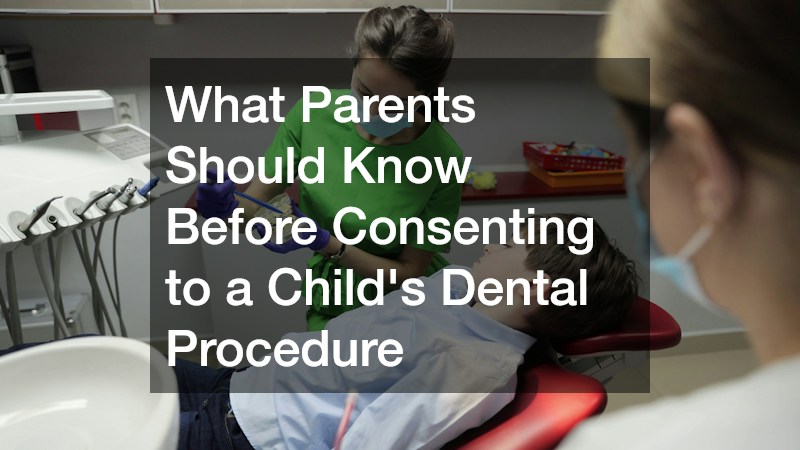
Hearing that your child needs a dental procedure can bring up a flood of questions, from whether it’s really necessary to how your child will handle it emotionally. As a parent, you are the one who has to weigh the options and give consent, often on a tight timeline. Understanding what the procedure involves, what questions to ask, and what to expect afterward can turn a stressful decision into a confident one. This guide walks through the key things worth knowing before you sign any consent form.
Understanding Why the Procedure Is Recommended
Before agreeing to anything, ask the provider to explain exactly why the procedure is being recommended for your child’s specific situation. Not every cavity or dental issue requires the same level of intervention, and treatment plans should be based on your child’s age, the severity of the problem, and their ability to cooperate during care. A good kids dentist will walk you through the diagnosis using x-rays or photos so you can see the issue yourself rather than just taking it on faith. If the explanation feels rushed or vague, it is completely reasonable to ask for more detail or a written summary of the findings.
It also helps to understand what happens if you wait or choose a less invasive option. Some dental problems in children progress slowly, while others can worsen quickly and affect permanent teeth developing underneath. Knowing the realistic timeline gives you room to make a decision that fits your family’s circumstances without feeling pressured.
- Ask what specific tooth or teeth are affected and why
- Request to see x-rays or images supporting the diagnosis
- Find out what could happen if treatment is delayed
- Clarify whether the issue is urgent or can be monitored first
Questions to Ask About Sedation and Anesthesia Options
Many pediatric dental procedures involve some form of sedation, ranging from mild options like nitrous oxide to deeper sedation or general anesthesia for more involved work. Each option carries different risks, recovery times, and monitoring requirements, so it is important to understand exactly what is being proposed for your child. Ask who will be administering and monitoring the sedation, and what qualifications that person holds. Children can react differently to sedation than adults, so providers should be prepared to explain how they adjust dosing and monitoring for younger patients.
It is also worth discussing your child’s medical history in detail, including allergies, prior reactions to medication, and any respiratory or heart conditions. These factors can influence which sedation method is safest. Do not hesitate to ask about the emergency protocols in place should something unexpected happen during the procedure.
- Ask exactly which sedation method will be used and why
- Confirm the qualifications of the person monitoring sedation
- Share your child’s full medical and medication history
- Ask about fasting instructions before the appointment
- Find out what emergency equipment and protocols are on site
Reviewing Alternative and Less Invasive Treatment Paths
Before consenting to a more involved procedure, it is worth asking whether there are alternative treatments that could address the problem with less intervention. For example, some early-stage gum issues in children can sometimes be managed with improved home care, fluoride treatments, or less invasive in-office therapies rather than jumping straight to a more aggressive approach. In certain cases, providers now use laser gum therapy as a gentler alternative to traditional surgical methods, which can mean less bleeding, faster healing, and reduced discomfort for a child. Asking about these options upfront ensures you are not defaulting to the most invasive path simply because it was mentioned first.
That said, alternatives are not always appropriate, and a provider should be honest about when a less invasive option is unlikely to solve the underlying problem. The goal is to make sure you have the full picture of what is available, not necessarily to choose the easiest-sounding option by default.
- Ask if a less invasive treatment could achieve a similar result
- Request an explanation of the pros and cons of each option
- Ask how long each alternative is expected to last
- Clarify the cost and time differences between options
Preparing Your Child Emotionally Before the Appointment
How you talk to your child about an upcoming dental procedure can significantly affect how they handle the day itself. Younger children often take cues from a parent’s tone, so staying calm and using simple, honest language tends to work better than overexplaining or minimizing what will happen. Avoid words that might sound scary out of context, like “shot” or “drill,” and instead focus on what your child will feel or experience in relatable terms.
It can also help to involve your child in small decisions where possible, such as picking a comfort item to bring along or choosing what to do as a reward afterward. Giving them a sense of control, even in a small way, can reduce anxiety considerably. Reading a children’s book about visiting the dentist or role-playing the appointment at home are simple ways to build familiarity before the actual day.
- Use simple, honest, age-appropriate language
- Avoid scary words and instead describe sensations plainly
- Let your child bring a comfort item like a blanket or toy
- Practice the visit at home through role-play or books
- Plan a small reward or calming activity for after the appointment
Planning for Recovery and Aftercare at Home
Recovery looks different depending on the type of procedure and whether sedation was involved, so ask for detailed aftercare instructions before you leave the office. This should include information on diet restrictions, pain management, activity limits, and signs that would warrant a follow-up call. Children recovering from sedation may be groggy, irritable, or nauseated for several hours, and knowing this in advance prevents unnecessary worry.
It is also useful to ask what normal healing looks like versus what would be considered a red flag. Some swelling or mild discomfort is expected after certain procedures, but excessive bleeding, high fever, or prolonged pain should prompt a call to the provider. Having a written aftercare sheet, rather than relying on memory, makes it easier to catch issues early.
- Get written instructions for pain management and diet
- Ask how long grogginess or irritability might last after sedation
- Clarify which symptoms are normal versus concerning
- Keep the office’s after-hours contact number on hand
- Schedule any recommended follow-up visit before leaving
Giving consent for your child’s dental procedure is ultimately about feeling informed, not just checking a box. By asking thoughtful questions about the diagnosis, sedation, alternatives, and recovery, you put yourself in a much stronger position to advocate for your child’s comfort and health. Take the time you need to get clear answers, and do not hesitate to seek a second opinion if something still feels uncertain. Your confidence going into the appointment can make a real difference in how smoothly the day goes for your child.