
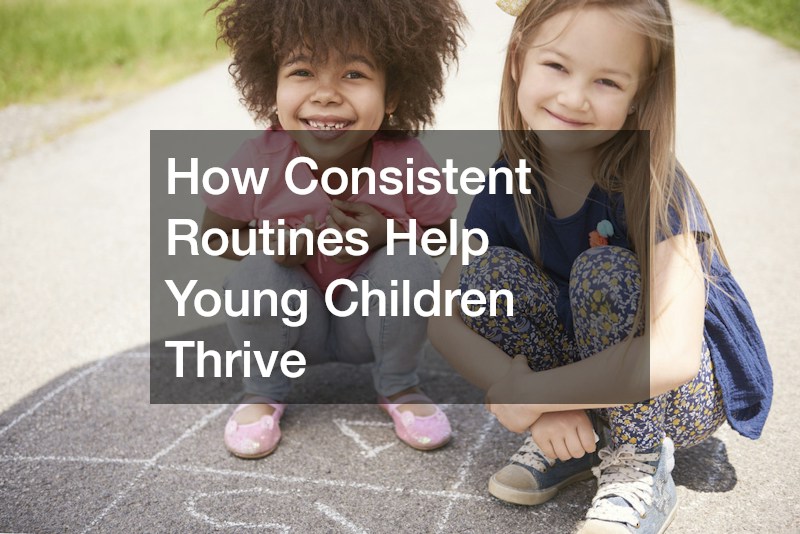
Young children thrive on knowing what comes next. When mornings, meals, play, and bedtime follow a familiar pattern, little ones feel safe and secure, and that sense of security gives them room to explore and learn. Routines don’t need to be rigid or complicated to make a difference. Below, we’ll explain how consistent routines help young children thrive and how local early learning centers build them into the school week.
Understanding Why Routines Matter
Predictability helps children feel calm because they can anticipate what’s coming. Toddlers and preschoolers have little control over their world, so a steady rhythm gives them a sense of confidence. Routines also reduce power struggles, since children know what to expect and the steps become habits.
Building Predictable Mornings and Bedtimes
Start and end the day with simple steps that happen in the same order. A morning routine might include getting dressed, eating breakfast, and packing a bag, while a bedtime routine might include a bath, a book, and a quiet song. Consistent sleep and wake times can help children feel rested, though every child’s needs differ, so check with your pediatrician if you have questions. Local early learning centers like ours see how smoothly children settle in when home and school routines share a similar rhythm.
Supporting Motor Skills Through Daily Movement
Active play deserves a regular spot in the day. According to PubMed Central, during the preschool years (two to five years), there is great potential for children to rapidly improve their motor skills and become highly coordinated in their movements. Building time for running, climbing, dancing, and drawing into your routine gives children steady chances to practice.
Balancing Structure With Flexibility
A good routine has a steady shape, but it can bend when life calls for it. Illness, travel, and special events will interrupt the schedule from time to time, and that’s normal. Talk about changes ahead of time so children know what to expect, and return to your usual pattern as soon as you can.
Many early learning schools offer programs for toddlers through Pre-K, often grouped by age into classes such as Pre-K2, Pre-K3, and Pre-K4. A well-rounded weekly schedule may include creative arts, physical education, and STEAM activities, along with hands-on learning that keeps young children engaged. Some schools also serve organic meals prepared fresh on-site, which can be a plus for families who care about nutrition. When comparing early learning centers, parents should consider touring several schools and checking enrollment timelines early, since spots for the upcoming school year can fill quickly.